The 5 Biggest Mistakes New Sterile Processing Technicians Make (And How to Avoid Them)
NHNathan Hostetter · November 3, 2026 · 4 min read
Starting a new career in sterile processing is exciting and a little overwhelming. You're learning fast, the department is busy, and everyone around you seems to move with quiet confidence. It's easy — genuinely easy — to pick up shortcuts without realizing they're shortcuts at all.
That's the dangerous part. Most mistakes new techs make aren't careless. They're the result of never being shown the right way clearly enough in the first place.
I want to fix that. Here are the five biggest mistakes I see new sterile processing technicians make, and what to do instead.
Mistake #1: Skipping Pre-Cleaning at the Point of Use
By the time an instrument reaches the decontamination area, it may have been sitting for 20 minutes, an hour, or longer. Bioburden dries. Dried organic material is exponentially harder to remove — and if it isn't removed, sterilization cannot do its job. Sterilization kills microorganisms; it does not dissolve dried blood and tissue.
The fix: Wipe gross soil from instruments immediately after use and keep them moist during transport. Enzymatic foam or a damp towel both work. When you're in decontam, treat every instrument as if it dried in transit — because it probably did.
Mistake #2: Rushing the Manual Cleaning Step
Automated washers are powerful, but they are not magic. They depend on you doing a real pre-clean first. New techs sometimes load instruments straight from the tray into the washer and consider the job done. The problem is that lumened instruments — trocars, suction tips, cannulas — require manual brushing through the lumen before the washer ever touches them. A brush needs to pass through until it comes out clean on the other side. Once is rarely enough.
The fix: Follow the instrument manufacturer's Instructions for Use (IFU). Those documents specify brush diameter, number of passes, and what cleaning chemistries are compatible. The IFU is not optional reading — it's the standard you're legally and professionally accountable to.
Mistake #3: Skipping the Inspection Step at Assembly
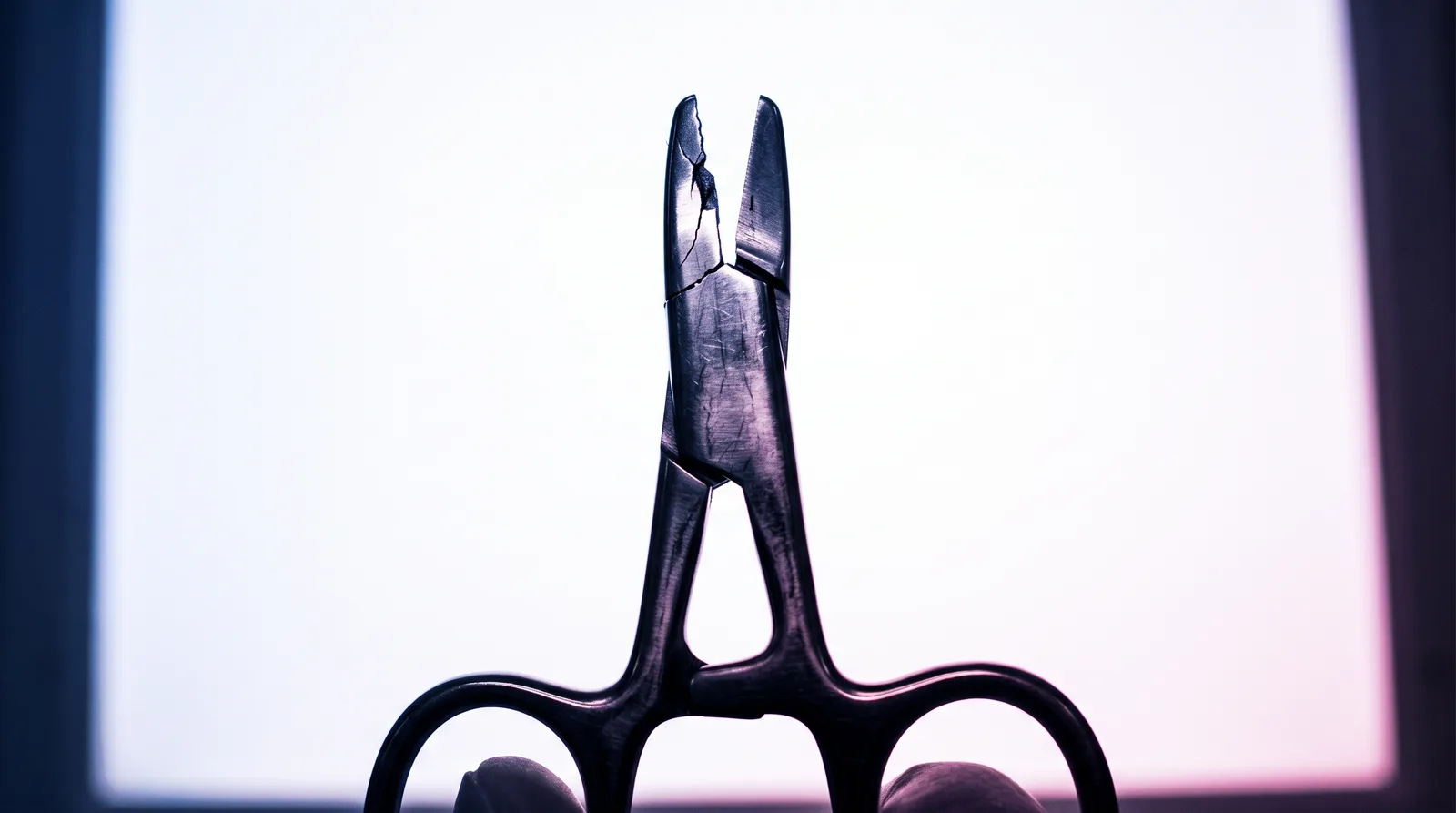
Assembly is not just about putting things back together. It's the last human checkpoint before an instrument goes to a patient. New techs under time pressure often skip — or skim — inspection. A cracked needle driver jaw, a box lock that won't ratchet, a missing component: these problems don't get caught again until a surgeon is mid-procedure.
The fix: Use your magnification loupe. Test every ratchet, every hinge, every box lock. Hold instruments up to your light source and look through any lumen. If it doesn't look right, pull it. A delayed tray is a solvable problem. A defective instrument in the field is not.
Mistake #4: Improper Wrapping and Packaging Technique
A sterile package that is wrapped incorrectly is not sterile — it's a liability. Common errors include wrapping too tightly (which can compromise the barrier during sterilization), not doing a true sequential wrap, or failing to leave enough tail to open aseptically later. The same applies to peel pouches: double-pouching without proper alignment, or sealing a pouch with an instrument that punctures the material, destroys the sterile field before it's even set up.
The fix: Practice your envelope fold and sequential wrap until it's muscle memory. Check that every package has a chemical indicator inside and outside. For peel pouches, confirm the seal is complete across the entire width — no channels, no gaps. If you can pull the seal apart with two fingers without it peeling cleanly, it wasn't sealed.
Mistake #5: Treating Sterile Storage Like a Stockroom
Sterile storage is not a warehouse. It's a controlled environment where event-related sterility applies — meaning a package is considered sterile until something happens to compromise it, whether that's a torn wrap, a wet package, or a tray stored on the floor. New techs sometimes stack trays carelessly, store packages on the lowest shelf (ground contamination risk), or return a visually damaged package to rotation without pulling it for reprocessing.
The fix: Every package that leaves storage and comes back — for any reason — gets inspected before it goes back on the shelf. Wet, torn, punctured, or compressed? Pull it and reprocess it. Sterile storage standards exist to protect that final barrier between your work and the patient.
The Real Point
None of these mistakes happen because new techs don't care. They happen because sterile processing has a steep learning curve and not every department has the training infrastructure to catch gaps before they become habits.
The best thing you can do early in your career is learn the why behind every step — not just the what. When you understand that sterilization cannot penetrate bioburden, you'll never skip pre-cleaning again. When you understand what a compromised sterile barrier actually means for a patient in an OR, inspection becomes automatic.
That's exactly the depth I teach inside Sterile Processing Academy — the full decontamination-to-storage workflow, grounded in clinical standards, built to prepare you for CSPDT or CRCST certification and for the real work those credentials represent. If you want to build your skills the right way from the start, I'd love to have you in there.
Want to go deeper than a blog post?
Sterile Processing Academy
A comprehensive certification-prep program training new sterile processing technicians in all four core domains — Decontamination, Assembly, Sterilization, and Sterile Storage — with quizzes, tests, and a proctored final exam. Earn a Certificate of Completion accepted toward your CSPDT (CBSPD) or CRCST (HSPA) certification application.
Start learning — $49.99/mo