
What Is the Spaulding Classification System and Why Does Every SPD Tech Need to Know It?
NHNathan Hostetter · November 3, 2026 · 4 min read
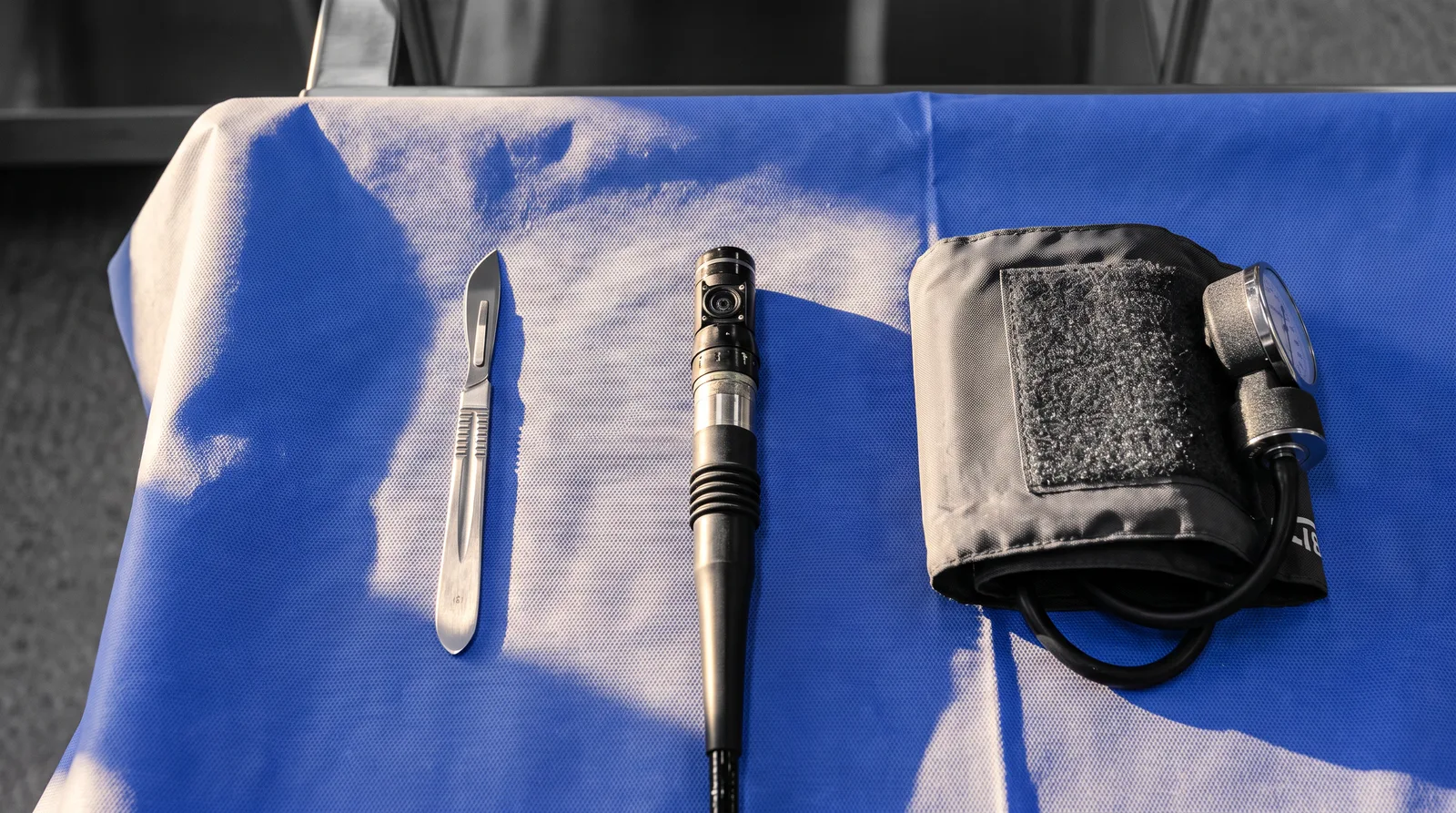
If you're new to sterile processing, you're going to hear three words thrown around constantly: critical, semi-critical, and non-critical. These aren't vague labels — they come from a specific, well-established framework called the Spaulding Classification System, and understanding it is non-negotiable if you want to work confidently in an SPD department or pass your CRCST, CSPDT, or any other certification exam.
Let me break it down for you in plain language.
Where It Comes From
The Spaulding Classification was developed by Dr. Earle H. Spaulding in 1968. He proposed a rational approach to disinfection and sterilization based on one simple idea: the level of reprocessing a device requires should match the risk of infection that device poses to the patient.
That's it. That's the whole logic. The elegance of the system is that it's completely risk-based, which means it scales to new devices and new clinical situations without needing to be rewritten every decade. Regulatory bodies, accrediting organizations, and manufacturers all reference it today.
The Three Categories — and What They Actually Mean
Critical Items
A critical item is any device that enters sterile tissue or the vascular system. Think surgical instruments, implants, cardiac catheters, and anything that goes inside the body where there is no natural barrier to infection.
The reprocessing requirement for critical items is sterilization — not just high-level disinfection, sterilization. There is no acceptable middle ground here. If a device contacts sterile tissue and it isn't sterile, you've put a patient at serious risk of infection.
Examples you'll see on the job and on your exam:
- Scalpels and scissors used in an OR procedure
- Orthopedic implants
- Laparoscopic trocars and instruments
- Biopsy forceps that penetrate mucosa
Semi-Critical Items
A semi-critical item contacts mucous membranes or non-intact skin but does not penetrate sterile tissue. Mucous membranes — like those lining the throat, GI tract, or airways — do have some natural defense against infection, but they are still vulnerable. That's why the standard here is high-level disinfection (HLD) at minimum, though sterilization is always acceptable if feasible.
This category is where flexible endoscopes live, which is why endoscope reprocessing is such a specialized and heavily regulated discipline.
Examples:
- Flexible endoscopes (bronchoscopes, colonoscopes, gastroscopes)
- Laryngoscope blades
- Respiratory therapy equipment
- Vaginal specula (when used on non-intact tissue)
One thing that trips up new techs: at minimum HLD means that some facilities choose to sterilize semi-critical items when possible, and that's perfectly acceptable. The Spaulding system sets the floor, not the ceiling.
Non-Critical Items
A non-critical item contacts only intact skin, or sometimes doesn't contact the patient at all. Intact skin is an effective barrier against most pathogens, so the reprocessing requirement drops to low- or intermediate-level disinfection.
Examples:
- Blood pressure cuffs
- Stethoscopes
- Bedpans
- EKG leads
- OR table surfaces
Non-critical doesn't mean "doesn't matter" — healthcare-associated infections can still spread through contaminated surfaces. It just means the risk pathway is different and the reprocessing solution is proportionate.
How This Drives Real Decisions in the SPD
Every time a device comes through your department, someone — ideally everyone involved — is thinking about Spaulding classification. Here's how it plays out practically:
Decontamination: You may treat most items similarly at the cleaning stage, but classification affects what comes next.
Assembly and tray building: When you're pulling instruments for a procedure, understanding that everything on a sterile field is a critical item keeps you alert to any breach in packaging or sterilization verification.
Sterilization method selection: A device's classification — along with its material compatibility — determines whether it gets steam sterilized, ETO processed, or high-level disinfected and stored wet.
Manufacturer Instructions for Use (IFU): The IFU tells you how to reprocess. The Spaulding classification tells you what level of reprocessing is required. Both matter. Neither overrides the other — they work together.
What to Expect on Your Certification Exam
The CRCST (HSPA) and CSPDT (CBSPD) exams both test Spaulding classification directly. You'll see scenario-based questions like:
"A bronchoscope is used during a procedure. What is the minimum required level of reprocessing?"
The answer is high-level disinfection — because a bronchoscope is semi-critical (it contacts mucous membranes of the airway but doesn't enter sterile tissue under normal use).
Being able to categorize a device quickly and accurately, and connect that category to the correct reprocessing requirement, is a core competency the exams measure — and one you'll use every single shift.
The Big Takeaway
The Spaulding Classification System isn't just a memorization task for your exam. It's the reasoning framework behind everything sterile processing does. Once you internalize the logic — match the reprocessing level to the infection risk — you stop guessing and start thinking like a trained professional.
If you want to go deeper on how Spaulding applies to specific workflows, instrument categories, and exam-style scenarios, that's exactly what we build on inside Sterile Processing Academy. The foundation starts here — but there's a lot more to learn.
Want to go deeper than a blog post?
Sterile Processing Academy
A comprehensive certification-prep program training new sterile processing technicians in all four core domains — Decontamination, Assembly, Sterilization, and Sterile Storage — with quizzes, tests, and a proctored final exam. Earn a Certificate of Completion accepted toward your CSPDT (CBSPD) or CRCST (HSPA) certification application.
Start learning — $49.99/mo